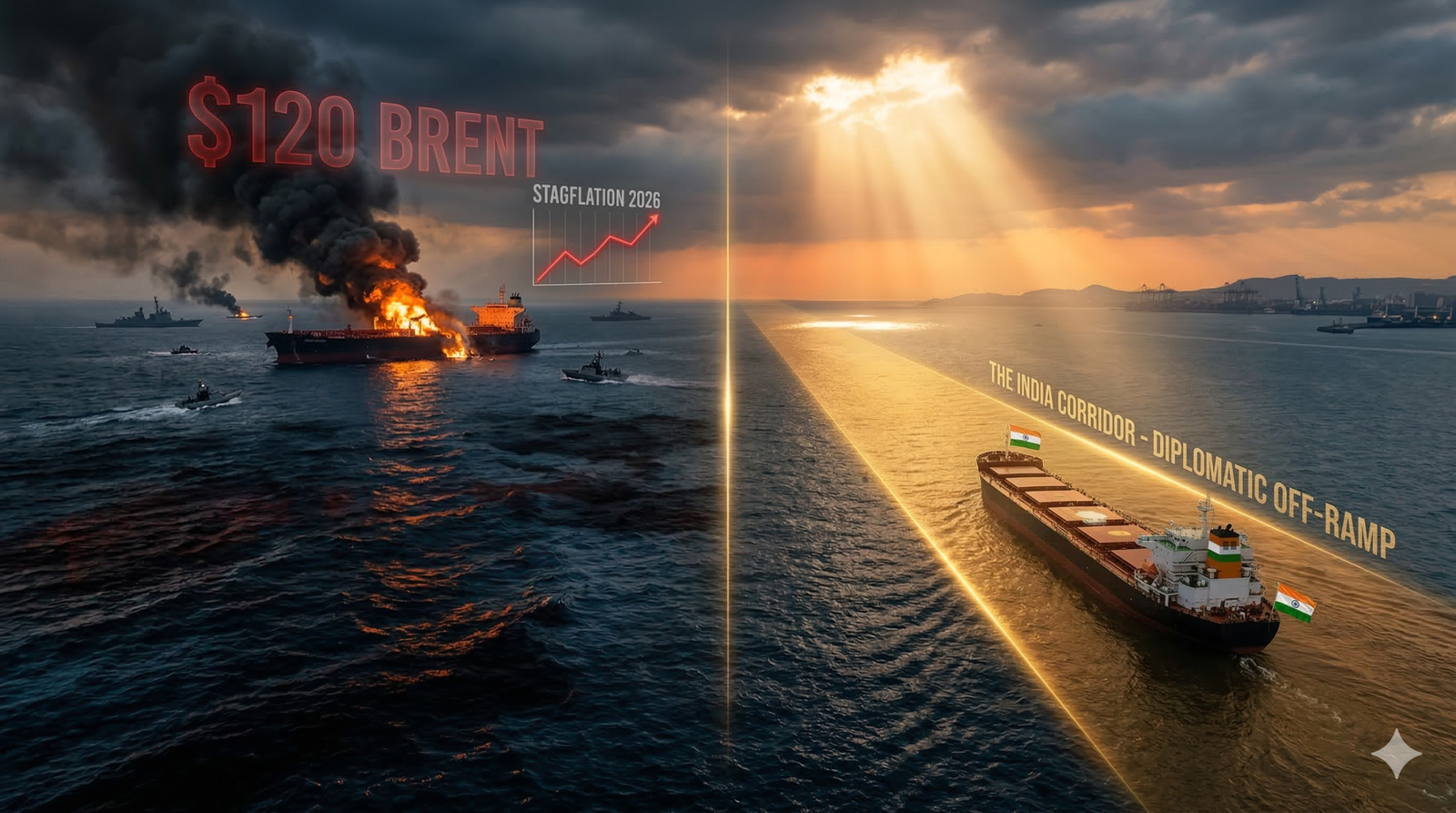
Oil at $120. The Fed paralyzed. But one quiet diplomatic signal changes everything. Here’s the full macro playbook.

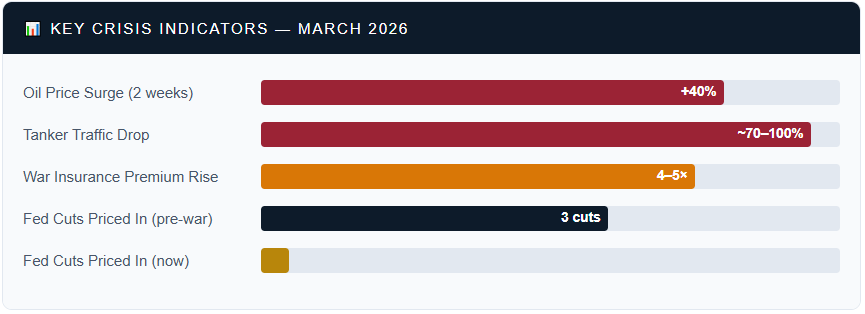
On February 28, 2026, the world changed. U.S. and Israeli airstrikes killed Iran’s Supreme Leader and targeted its nuclear sites. Iran’s response was immediate and calculated: it closed the Strait of Hormuz — the narrow corridor through which 20% of the world’s daily oil supply flows. Within days, Brent crude surged past $100 and climbed toward $120. The rate cuts Wall Street had been counting on for 2026? Gone.
But buried beneath the headlines is one signal nobody is talking about — and it may be the most important data point for investors right now.
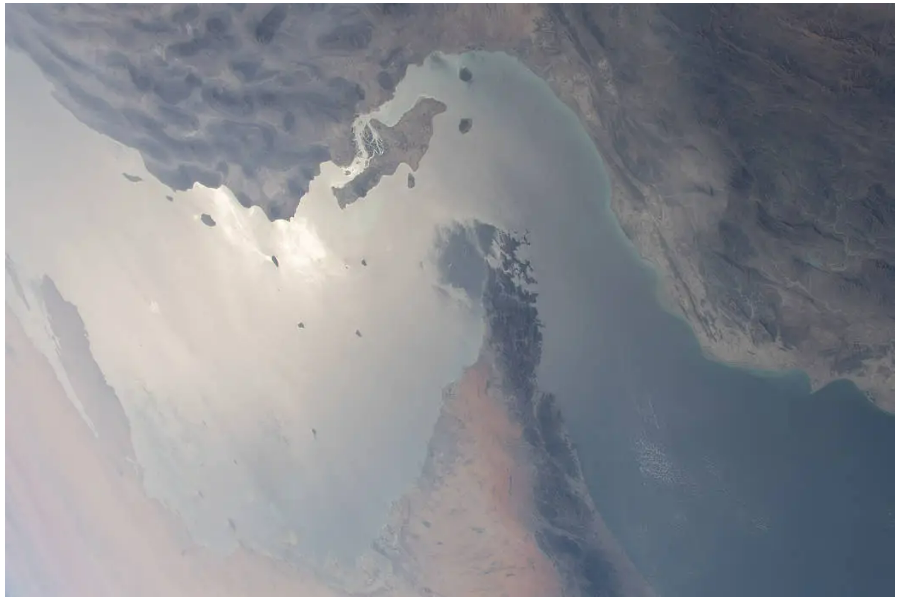
The Crisis: How a 33km Waterway Holds the Global Economy Hostage
The Strait of Hormuz is, in the most literal sense, the jugular vein of modern industrial civilization. Iran’s strategy was cold and rational: with its leadership killed and its nuclear sites destroyed, it reached for its most powerful asymmetric weapon — economic disruption at scale.
The IRGC declared the strait closed. War-risk insurance premiums rose 4–5x. Qatar declared force majeure on LNG contracts. Over 150 ships anchored outside the strait to avoid attack. The IEA warned of the largest oil supply disruption in its recorded history.
The Hidden Signal: India’s Quiet Diplomatic Masterstroke
While Washington applied overwhelming military force and Brussels imposed sanctions, New Delhi picked up the phone.
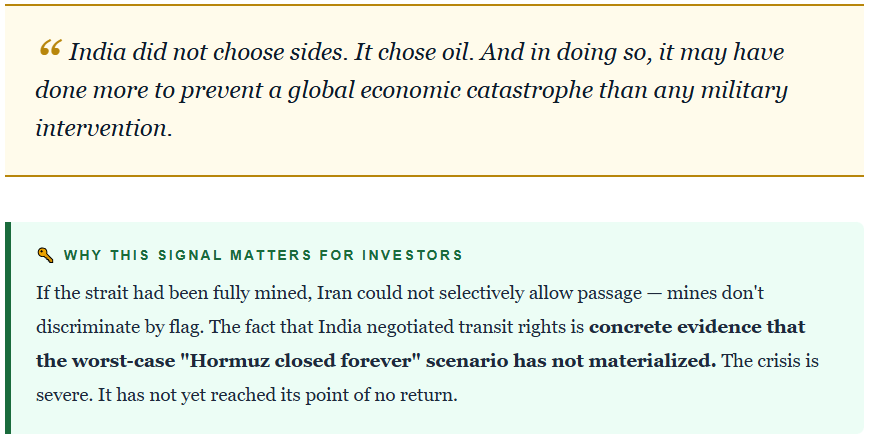
India’s External Affairs Minister S. Jaishankar held three direct calls with Iran’s Foreign Minister Abbas Araghchi. The result: Indian-flagged tankers — MT Pushpak and MT Parimal — were reported transiting the strait. A Liberia-flagged vessel carrying Saudi crude for Indian state refiner BPCL arrived at Mumbai port.
The Stagflation Trap: When $120 Oil Meets 1.4% GDP
Stagflation — the toxic combination of rising inflation and stagnating growth — is the one macro environment where the Fed’s toolkit becomes useless. The medicine for inflation (higher rates) worsens growth. The medicine for weak growth (rate cuts) worsens inflation.
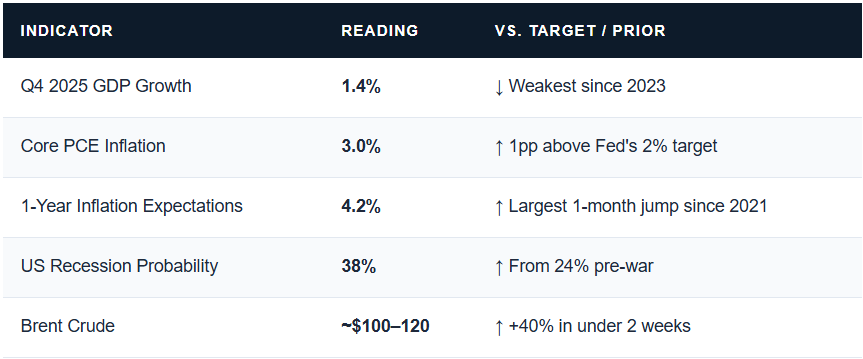
The U.S. entered 2026 already vulnerable: Q4 GDP at 1.4%, Core PCE at 3.0% — a full point above target — and unemployment rising. Now add $120 oil on top.
Why the Fed Cannot Cut: The Four-Lock Problem
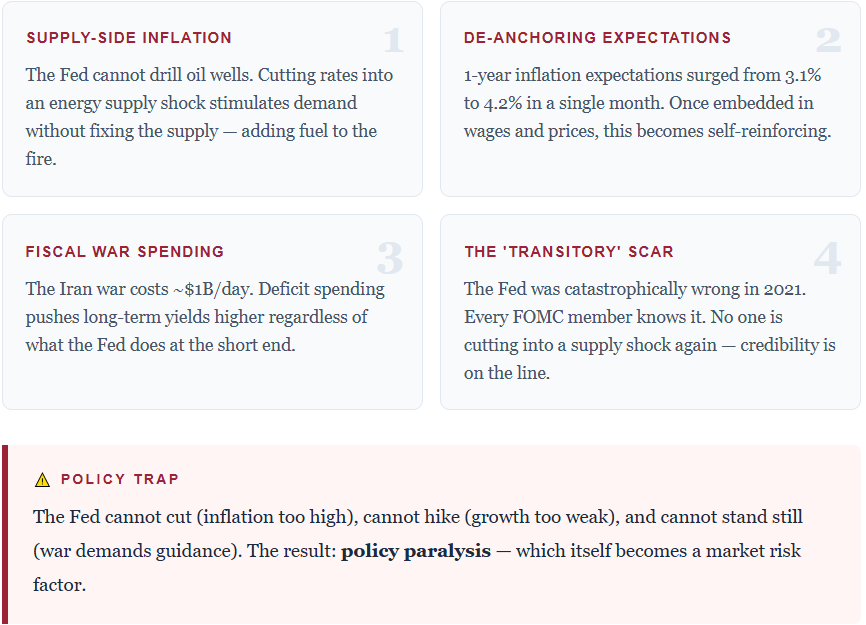
Just weeks ago, consensus expected three Fed rate cuts in 2026. As of March 12, not even one is fully priced in. Here’s the structural reason rates are stuck — what we call the Four-Lock Problem:
The Investment Playbook: Asymmetric Positioning for a Bimodal World
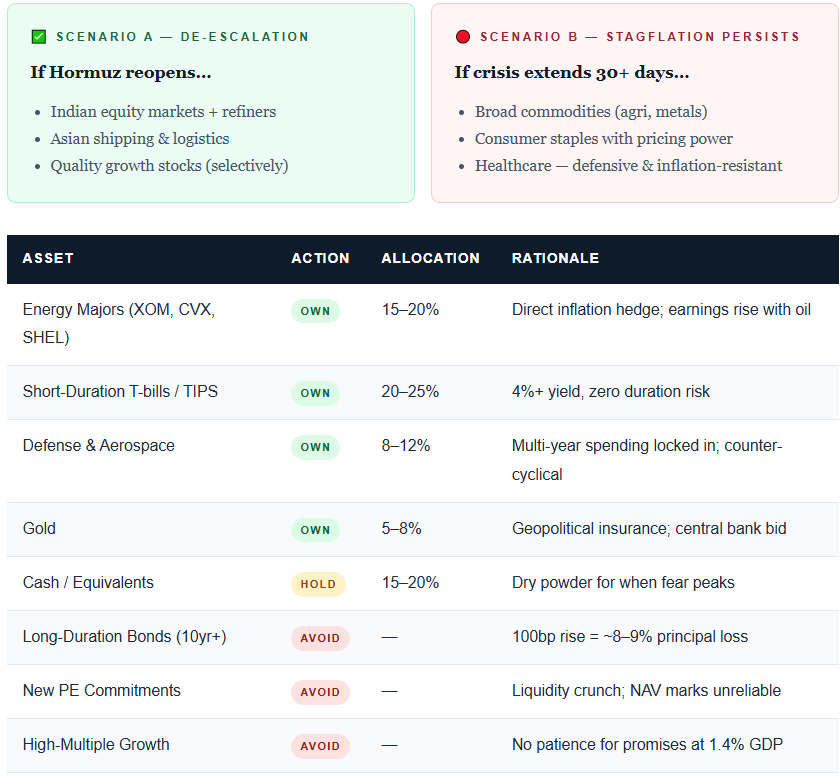
The outcome distribution right now is bimodal. Either India’s diplomatic channel holds and Hormuz gradually reopens (Scenario A), or the crisis persists for months (Scenario B). Here’s how to position for both without being destroyed by either.
The Bottom Line
The world has not ended. But it has become structurally more expensive, more volatile, and more geopolitically fragmented. Interest rates cannot fall as fast as markets hoped — not because the Fed is stubborn, but because the conditions that would justify cutting are being actively contested in the Persian Gulf, in energy markets, and in the corridors of power from Washington to New Delhi.
The India-Iran diplomatic channel is the single most important variable to watch. It tells us the crisis has a potential off-ramp. Whether that off-ramp is taken determines whether 2026 becomes a year of managed turbulence — or something far worse.
Position accordingly. Keep your powder dry. And watch the strait.
Disclaimer: This article is for informational and educational purposes only. Nothing herein constitutes investment advice or a recommendation to buy or sell any security. Always conduct your own research and consult a qualified financial advisor before making investment decisions.
3 thoughts on “Between Crisis and Hope: Why Interest Rates Won’t Fall in 2026 — And How to Protect Your Portfolio”